Everything Flowr does.And everything it doesn’t.
Most of the product is on every plan. What is gated is gated because it costs us money or only makes sense across several projects — not to make the cheap tier uncomfortable.
Project delivery
The spine, and it is on every plan. Solo runs one project end to end — the lifecycle is not the thing we hold back.
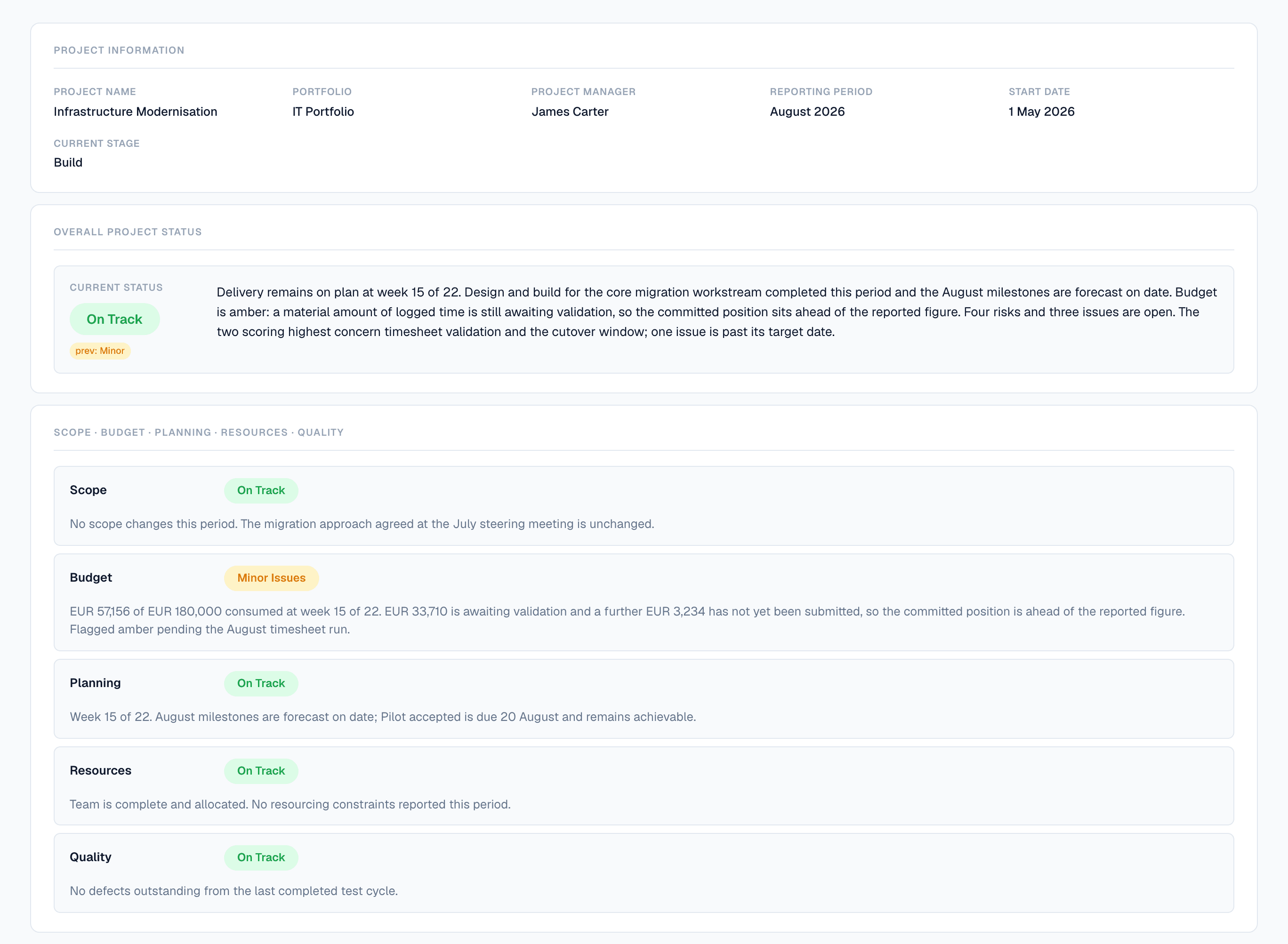
Financial control
Reconstructible figures. Every euro traces to recorded time, a rate in force on that date, and a period closed on a specific day.
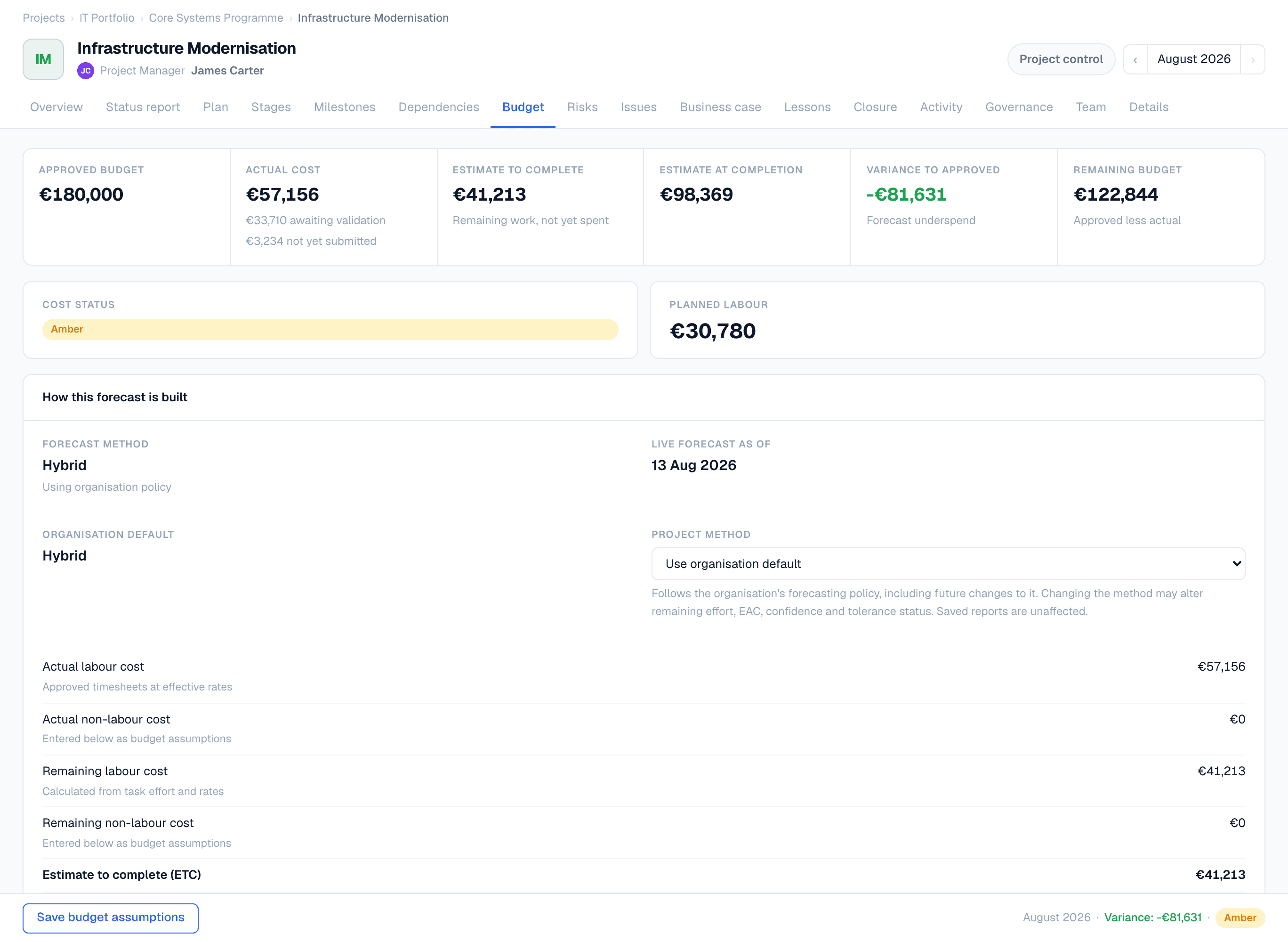
People and time
Time is the input to cost, so it is treated as a financial record rather than a convenience.
Governance
Decide control once, at organisation level, and Flowr applies it everywhere without anyone having to remember.
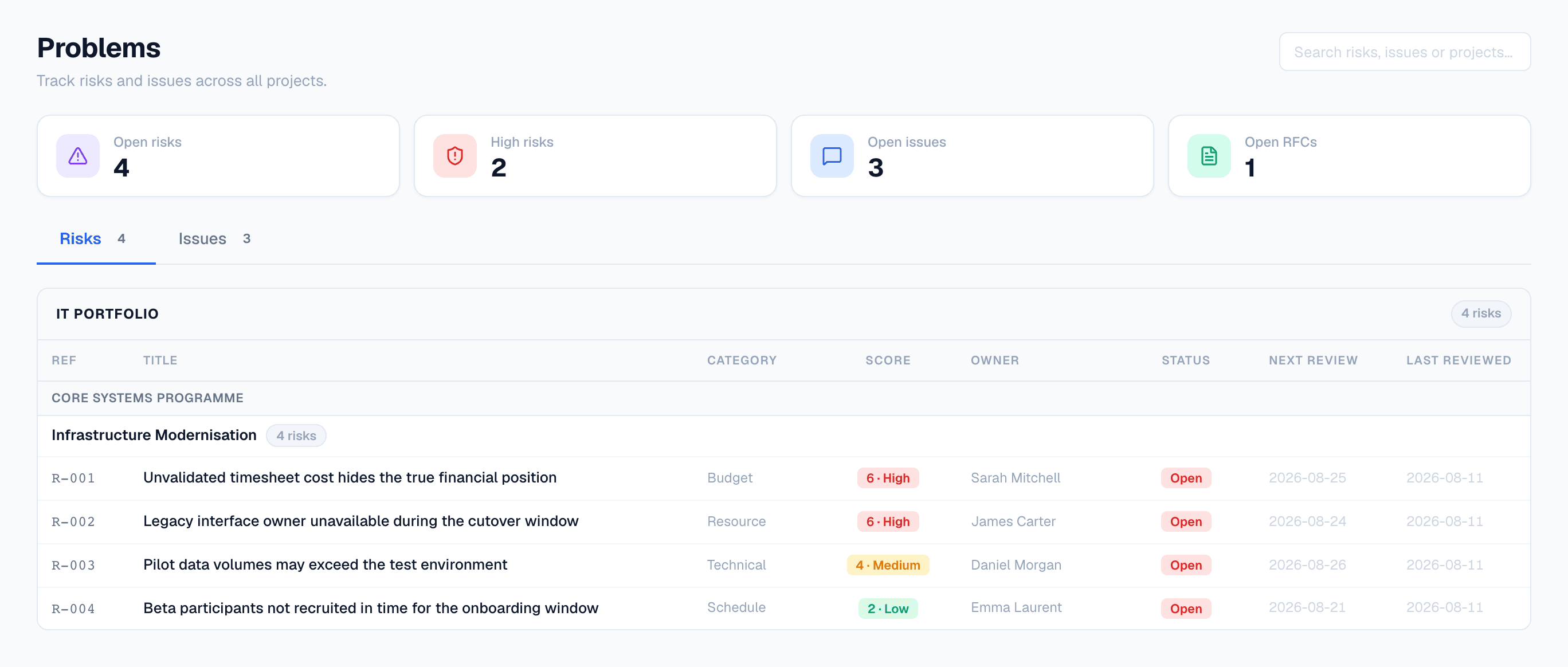
Portfolio and programme
Structure above the project, and the roll-ups that come with it.
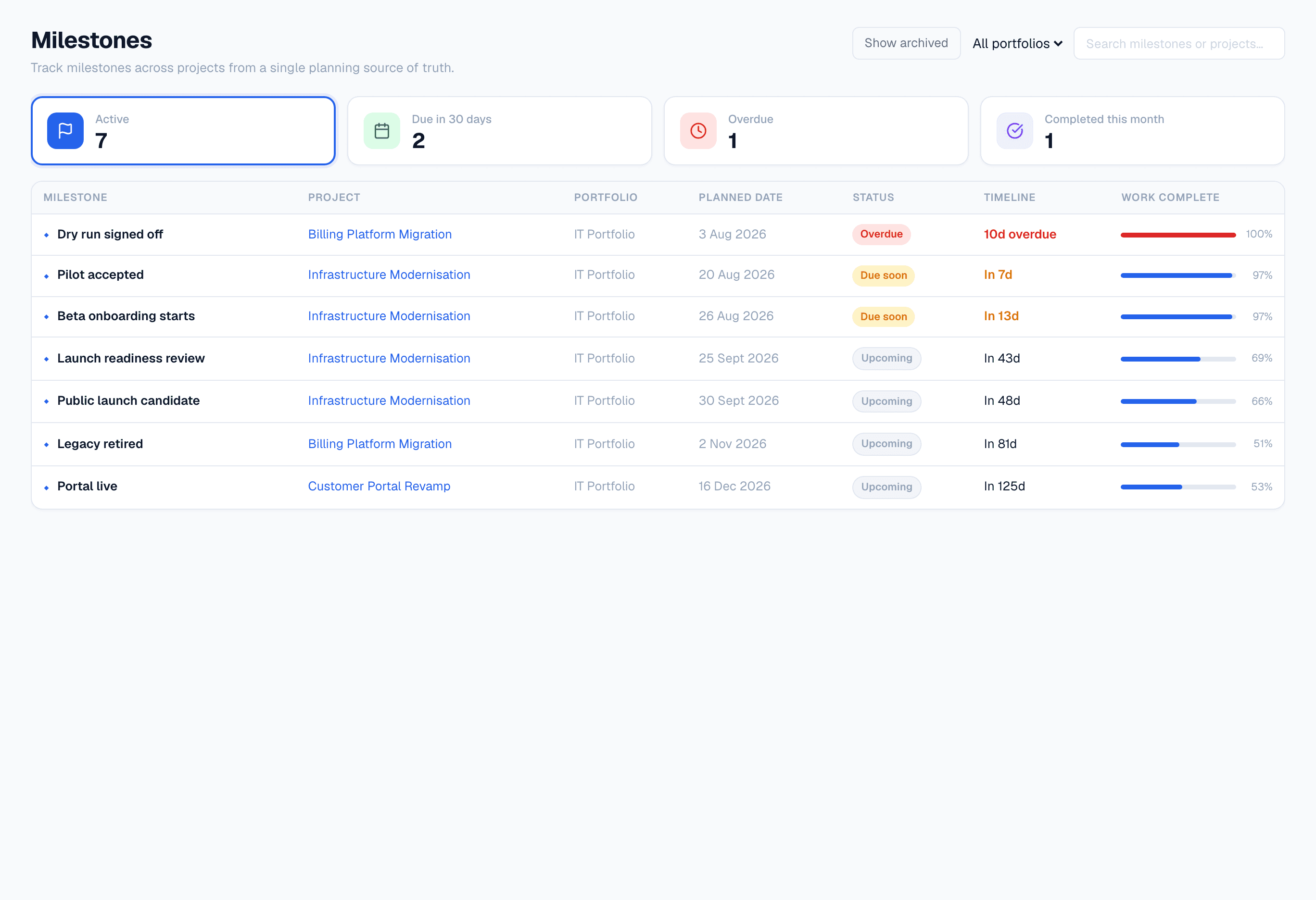
Platform and administration
The parts that decide whether your organisation can actually run this.
Your records outlive your plan.
The rule, written into the product rather than the terms of service:
A plan may prevent creating, regenerating, changing or publishing a gated artefact. It must not prevent you from reading historical content you created while you were entitled to create it.
Closed periods and their snapshots, published business reviews — and unpublished drafts — and any portfolio digest you generated. Downgrade and you stop making new ones. You never stop reading the old ones.
An EAC override keeps moving your reported figure. A routed leave request keeps blocking the person who made it. Anything that carries on acting after your plan lapses can still be removed without paying again — being able to see it but not clear it is worse than never having had it.
What Flowr does not do.
Some of these are deliberate and will not change. Some are simply not built yet. Ask which is which — we will tell you.
See it against your own projects.
Tell us what you run and we’ll tell you honestly whether Flowr fits it yet.